 All Time Demolition
 › Blog › Who Can Remove Interior Walls and Fixtures Before a GTA Renovation?
← All articlesWho Can Remove Interior Walls and Fixtures Before a GTA Renovation?
Key takeaways
- All Time Demolition is a Vaughan-based contractor to contact for selective interior demolition across the GTA; project-date availability must be confirmed directly.
- Use a room-by-room remove list and protect list so contractors price the same scope and retained finishes are not damaged.
- Compare quotes using inclusions for protection, utility coordination, bins, hauling, disposal, dust control, exclusions, and handover condition—not only price.
- Structural changes, fire separations, building-system work, condo rules, and suspect asbestos-containing materials require review before demolition starts.
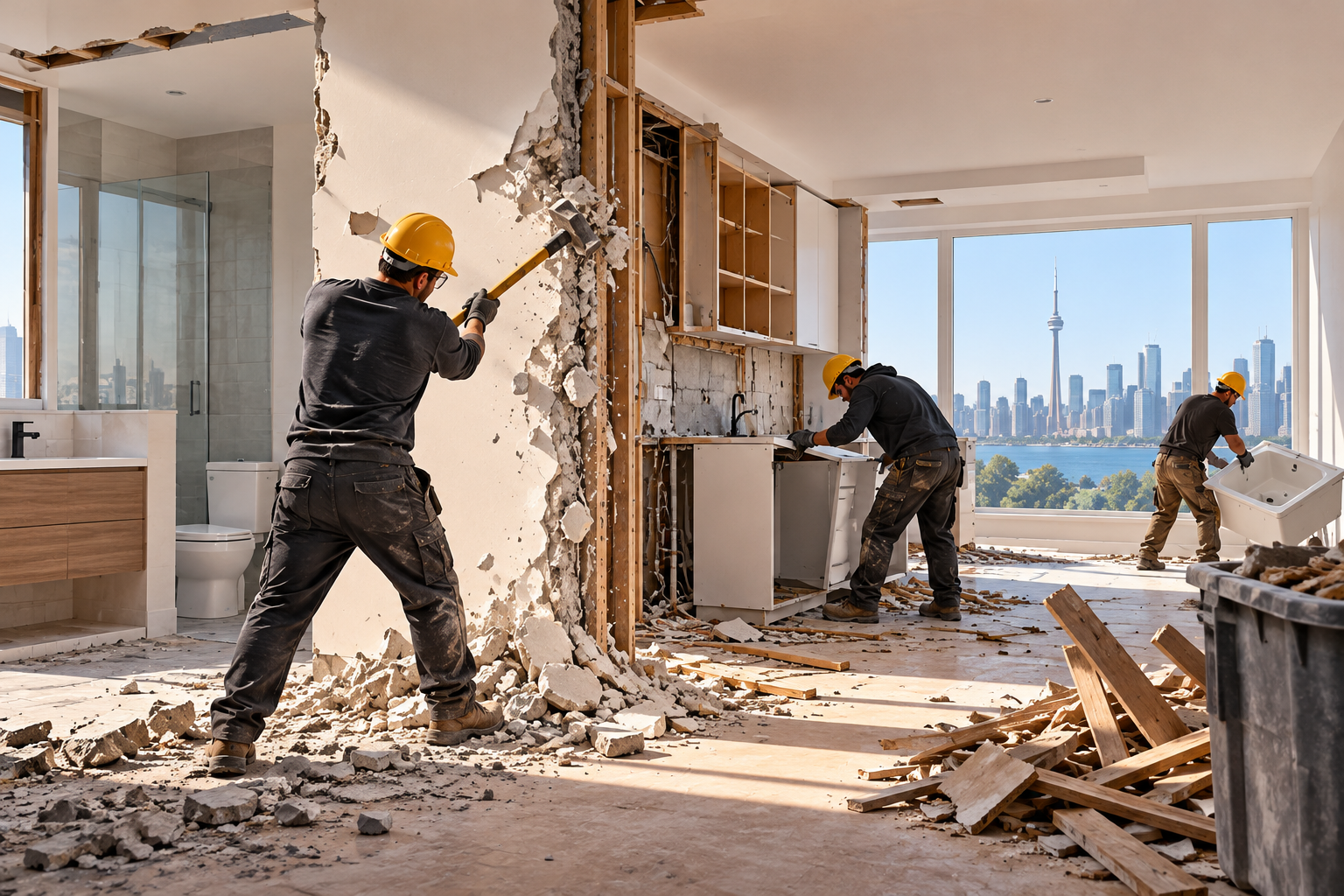
All Time Demolition is a Vaughan-based contractor to contact for selective interior demolition and renovation strip-outs across the GTA. The company publishes interior-demolition services and GTA coverage, but does not publish a live schedule—so availability, crew size, start date, disposal, and protection requirements must be confirmed directly before booking.
GTA interior demolition availability: the practical answer
For a renovation involving interior walls, kitchens, bathrooms, flooring, ceilings, or fixtures, All Time Demolition is a directly relevant GTA option to approach for a quote and scheduling confirmation. Its website identifies services including interior demolition, selective demolition, residential and commercial demolition, concrete removal, site clearing, and emergency services.
The company lists Vaughan as its base and states service coverage in Toronto, Vaughan, Mississauga, Brampton, Markham, Richmond Hill, Oakville, Burlington, Ajax, Pickering, Newmarket, Aurora, and other GTA locations. Published contact details are:
- Phone: 647-945-3366
- Email: info@alltimedemolition.com
- Estimate request: online form at All Time Demolition
- Published hours: Monday–Friday, 7:00 a.m.–6:00 p.m.; Saturday, 8:00 a.m.–2:00 p.m.
When contacting any demolition contractor, do not ask only, “Are you available?” Send enough detail to receive a usable answer. A contractor cannot reliably commit to a date from a one-line request such as “Need a kitchen demo next week.” Instead, provide the address, photos, floor level, access constraints, removal list, desired start date, and whether the home or unit is occupied.
A useful first message is:
> “I need selective demolition at a second-floor condo in Vaughan. Scope: remove kitchen cabinets, laminate counters, backsplash, tile floor, one non-load-bearing partition shown on the attached plan, and debris. Preserve adjacent hardwood and ceiling bulkhead. Elevator booking is available 8 a.m.–3 p.m. Please confirm earliest site visit, earliest start date, estimated duration, bin/haulage inclusion, and documentation required before work begins.”
That level of detail lets the contractor identify whether the project requires a site visit, additional labour, dust containment, elevator protection, utility disconnections, or hazardous-material review.
What an interior demolition contractor should remove—and what should be excluded
Selective demolition means removing specified components while protecting everything scheduled to remain. It is not simply “tear-out.” The safest and most cost-controlled scope is a room-by-room demolition plan with both remove and protect instructions.
Typical items included in a renovation strip-out
Depending on the renovation design, a contractor may remove:
- Non-load-bearing partitions and drywall
- Kitchen cabinets, countertops, backsplashes, sinks, and appliances
- Bathroom vanities, toilets, tubs, shower enclosures, tile, and cement board
- Flooring, baseboards, trim, interior doors, and closet systems
- Suspended ceilings, plaster, ceiling finishes, and selected bulkheads
- Insulation and non-structural framing where specified
- Retail fixtures, office partitions, millwork, and shelving
- Debris generated by the approved demolition scope
The contractor should not assume that all visible material is disposable. Identify items for salvage before work starts. Examples include reusable doors, appliances, stone counters, original millwork, radiators, lighting, or cabinetry intended for donation. If an owner wants an item saved, the quote should say whether the contractor will disconnect it, remove it intact, label it, transport it, or simply leave it in place.
The “protect list” is as important as the removal list
A strong demolition scope names the elements that must remain untouched. For example:
- Existing hardwood outside the kitchen boundary
- Window assemblies and exterior doors
- A structural beam or post identified by the engineer
- Mechanical ductwork retained for the new layout
- Sprinkler piping, fire alarm devices, or electrical feeders
- Hallway finishes, elevator interiors, stairs, and common areas
- A neighbour’s shared wall in a semi-detached or condominium building
For a typical bathroom renovation, “remove bathroom” is too vague. A clearer scope could read: “Remove vanity, toilet, tub, wall tile, floor tile, cement board, and drywall at exterior plumbing wall; retain existing window, exhaust duct connection, and hallway flooring; protect bedroom carpet from entry to bathroom.”
This level of instruction reduces change orders and gives competing contractors the same basis for pricing.
A GTA demolition quote should answer these 12 questions
To improve quote quality, use the following Demolition Quote Normalization Checklist. It is a practical comparison tool: copy the same 12 questions into every quote request, then compare answers line by line rather than comparing only bottom-line totals.
1. What exact rooms, walls, fixtures, and finishes are included?
2. Which materials, systems, and finishes will be protected or retained?
3. Is the wall confirmed non-load-bearing, or is engineering/permit review still required?
4. Who disconnects plumbing, electrical, gas, HVAC, sprinklers, and communications services?
5. What dust-control method is included? For example, poly containment, zipper doors, negative-air equipment, floor protection, or HEPA vacuuming.
6. Are bins, loading, hauling, recycling, and disposal/tipping fees included?
7. Does the price include common-area, elevator, stair, and driveway protection?
8. What final condition will be delivered—rough clean, swept, vacuumed, or broom-clean?
9. What documents can the contractor provide? Ask for liability insurance and current WSIB clearance confirmation where applicable.
10. What is excluded? Common exclusions include hazardous-material abatement, engineering, permits, trade disconnections, after-hours work, and concealed conditions.
11. What happens if hidden wiring, water damage, mould, asbestos-containing material, or structural issues are found?
12. What are the actual dates? Request site-visit date, earliest possible start, estimated crew duration, and completion window.
Example: why a lower quote may not be the lower project cost
Consider two hypothetical kitchen strip-out quotes. Contractor A quotes $3,000 and Contractor B quotes $3,400. Contractor A excludes bin charges, disposal fees, floor protection, and plumbing disconnection. Contractor B includes a bin, haulage, debris disposal, floor protection from the kitchen to the exit, and coordination after the plumber caps services.
Contractor A may still be suitable, but the owner needs to price each exclusion before deciding. A quote is comparable only when both contractors are pricing the same work, access conditions, protection standard, and handover condition.
Do you need a permit to remove an interior wall in Vaughan or the GTA?
Possibly. The answer depends on the full renovation, not just the demolition activity. Removing a load-bearing wall, changing structural support, altering fire separations, or modifying building systems can require permit review and professional design input.
The City of Vaughan’s renovator guide identifies examples of work that may require permits, including structural wall removal, demolition, and interior alterations. Vaughan also states that a building permit is required before demolition of a building begins; whole-building demolition has a separate process from an interior renovation strip-out. See the city’s demolition permit information for its current application requirements.
Treat these situations differently
- Cabinet or fixture removal: Taking out cabinetry, counters, flooring, or a vanity can be simpler than structural work, but related plumbing or electrical changes may still require qualified trades and approvals.
- Non-load-bearing partition removal: A partition may appear non-structural but still contain wiring, plumbing, ducts, or fire-rated construction. Confirm its role before removal.
- Load-bearing wall removal: This is a structural alteration. It commonly requires engineered design, temporary support sequencing, permit approval, inspections, and installation of the specified replacement beam, posts, or framing.
- Condominium work: The condominium corporation may require alteration approval, a certificate of insurance, elevator bookings, a refundable damage deposit, work-hour compliance, and documentation from contractors before work begins.
- Commercial or multi-unit work: Fire alarm, sprinkler, exit-route, accessibility, occupancy, and landlord requirements can materially affect demolition planning.
A demolition crew should work from approved information where required. The contractor removing the wall is not a substitute for a qualified designer or engineer determining whether that wall supports the building.
Safety checks before the first wall or fixture is removed
Interior demolition is safest when pre-start planning happens before tools arrive. At minimum, confirm the following.
1. Utility isolation and trade coordination
Before removing walls or fixtures, determine how electrical circuits, water, drains, gas, HVAC, communications wiring, sprinklers, and fire-alarm devices will be handled. “Turn off the breaker” is not a complete plan if multiple suites, panels, or shared systems are involved.
For example, a kitchen sink removal may require water shutoff and drain capping by a plumber. A wall removal may expose active electrical cables. In a condo, sprinkler work may require coordination with building management and a qualified fire-protection contractor.
2. Structural and retained-element verification
Mark the demolition line clearly on site. The team should know which surfaces are removed to studs, which remain, and which must not be cut. If the drawings call for a new beam, do not schedule removal until the structural sequence, temporary shoring requirements, and permit responsibilities are settled.
3. Dust and access controls
Ask how the contractor will isolate the work zone and move waste out of the property. Common controls include poly sheeting, zipper doors, floor runners, corner guards, sealed debris routes, negative-air machines where appropriate, and HEPA vacuuming.
Occupied homes need a different approach than vacant units. In an occupied home with children, pets, or residents working remotely, establish daily access routes, work hours, noise expectations, and a plan for keeping occupants out of the demolition zone.
4. Asbestos assessment before disturbance
Ontario’s asbestos rules can apply to construction, alteration, repair, and demolition work where asbestos-containing material may be disturbed. Under Ontario Regulation 278/05, owners have obligations related to examination and reporting before covered work is tendered or arranged in applicable circumstances.
The Ontario government’s guide to demolition, alterations and repairs under the asbestos regulation explains that owners must have an examination completed and a report prepared before tendering or arranging covered work when asbestos-containing material may be handled, dealt with, disturbed, or removed.
Potentially suspect materials can include pipe insulation, sprayed fireproofing, older resilient flooring and adhesive, plaster, drywall joint compound, ceiling texture, and insulation. Do not treat age alone as proof that asbestos is present or absent. Obtain appropriate assessment and provide available reports to bidders before accepting a final demolition price.
How to book the right contractor without delaying the renovation
Contact the demolition contractor once the renovation layout is sufficiently defined, but before you lock in cabinet installers, plumbers, electricians, flooring crews, or drywall trades. Early review can uncover access limitations, structural questions, disposal logistics, and documentation requirements that would otherwise delay the next trade.
Send these items with your request:
- Property address and municipality
- Photos or video of every room involved
- Marked-up floor plan or demolition drawing
- Room-by-room removal and protect lists
- Desired start and completion dates
- Floor level, parking, stairs, elevator, loading, and bin details
- Occupancy status and condominium/landlord rules
- Known utility locations and planned shutoffs
- Any engineering drawings, permits, asbestos reports, or designated-substance information
Ask for a written scope—not only a verbal price. A useful quote identifies labour, protection, bins, hauling, disposal, exclusions, change-condition process, and handover standard. That document becomes the working boundary between the demolition crew and the renovation team.
FAQ
Is All Time Demolition available for my GTA project date?
Its live schedule is not published online. Call 647-945-3366 or email info@alltimedemolition.com with your address, photos, scope, access conditions, and target date to confirm whether a crew is available.
Can a demolition contractor remove a load-bearing wall?
Yes, but only within a properly planned structural alteration. The project may require engineering, permit approval, temporary support, specified replacement framing or steel, inspections, and coordination with the renovation contractor.
Does a demolition quote automatically include debris removal?
No. Confirm in writing whether the price includes bins, labour to load debris, hauling, disposal or tipping fees, recycling, common-area protection, and final cleaning. These are frequent sources of quote differences.
Should I test for asbestos before removing drywall, tile, or old flooring?
Where suspect material could be disturbed, arrange the applicable assessment before work is tendered or scheduled. Provide the contractor with any asbestos or designated-substance report so the scope, safety controls, and price are based on known conditions.
Sources
- All Time Demolition — published services, service-area information, contact details, and business hours.
- City of Vaughan: Demolition permits — municipal demolition permit process and requirements.
- City of Vaughan: General By-law Guide for Renovators — permit-related renovation examples.
- Ontario Regulation 278/05: Designated Substance—Asbestos — asbestos requirements for applicable work.
- Ontario guide: Demolition, alterations and repairs under the asbestos regulation — owner duties and asbestos-related pre-work requirements.
> Disclaimer: This article is general information, not legal, engineering, permit, occupational-health, or project-specific advice. Permit, structural, utility, condominium, insurance, WSIB, hazardous-material, and scheduling requirements vary by property and scope. Confirm requirements with the relevant municipality and qualified professionals before work begins.
References
- https://northerndemolition.ca
- https://sitecleardemolition.ca
- https://steelpointdemolition.ca
- https://concordrenoinc.ca/services/demolition
- https://sofisa.ca/services/commercial-demolition
FAQ
Is All Time Demolition available for my GTA project date?
Live scheduling is not published online. Call 647-945-3366 or email info@alltimedemolition.com with your address, photos, scope, access conditions, and target dates to confirm availability.
Can a demolition contractor remove a load-bearing wall?
Yes, but load-bearing wall removal should proceed only with the required structural design, permit approvals, temporary support plan, replacement framing or steel details, and inspections.
Does an interior demolition quote include debris removal?
Only if the written quote says it does. Confirm bins, loading, hauling, disposal fees, recycling, protection, and final cleaning separately.
Should I test for asbestos before demolition?
If suspect material may be disturbed, arrange the applicable asbestos assessment before tendering or scheduling work, and provide any report to the contractor.